







Introduction
In today’s fast-paced industrial environments, power supplies rarely get the attention they deserve-until something goes wrong.
From PLC systems and control panels to drives and instrumentation, every critical operation depends on stable and reliable power. When a power supply fails, it doesnt just stop a machine-it can bring an entire production line to a halt.
At Epoch Technical, we regularly diagnose power supply failures that could have been prevented with early intervention. The truth is, most failures are not sudden-they build up silently over time.
Understanding why these failures happen is the first step toward eliminating costly downtime.
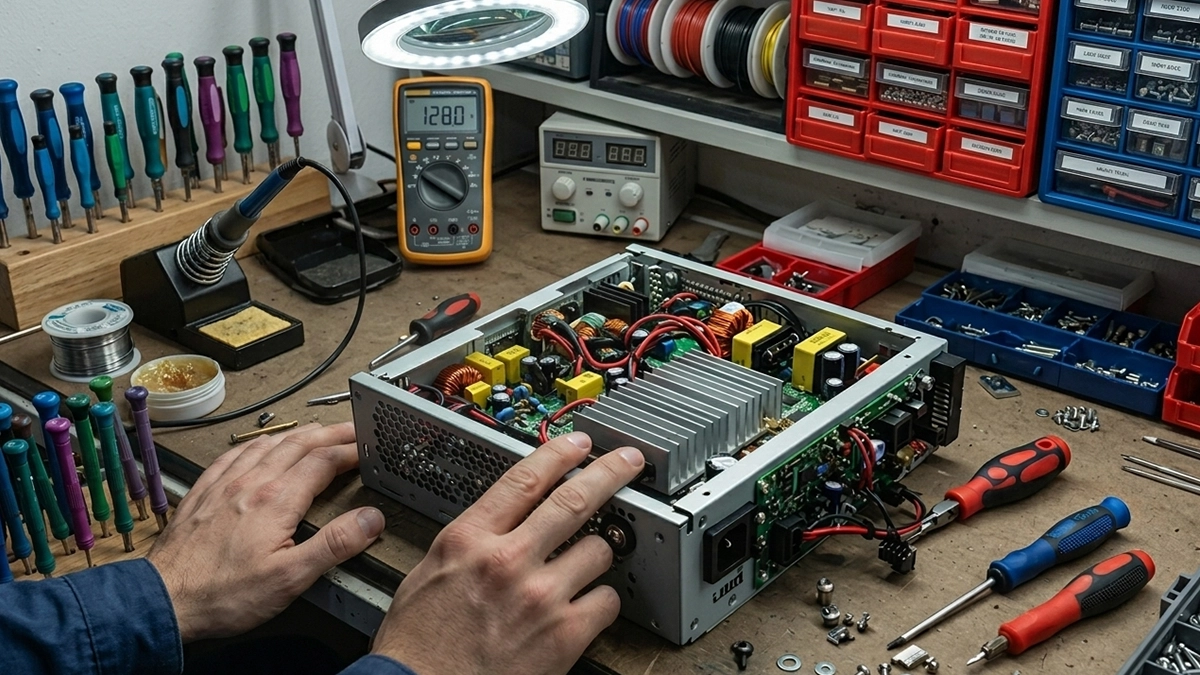
Understanding Industrial Power Supply Stress
Industrial power supplies-especially SMPS (Switched Mode Power Supplies)-are built to handle demanding environments. But even the most robust systems have limits.
In real-world conditions, they are constantly exposed to:
- - High ambient temperatures
- - Continuous 24/7 operation
- - Voltage fluctuations and unstable loads
- - Dust, humidity, and poor ventilation
Over time, these factors slowly degrade internal components, reducing efficiency and reliabilit-until failure becomes inevitable.
Common Industrial Power Supply Failure Causes
1. Capacitor Aging-The Silent Failure Trigger
If theres one component responsible for the majority of power supply failures, it’s the electrolytic capacitor.
Inside every SMPS, capacitors handle filtering and voltage smoothing. But over time, especially in high-temperature environments, they begin to deteriorate.
What really happens:
- - The electrolyte inside the capacitor gradually dries out
- - Internal resistance (ESR) increases
- - Filtering capability drops
What you’ll notice:
- - Unstable output voltage
- - Increased ripple and noise
- - Random system behavior
In many cases, replacing aging capacitors early can restore full functionality at a fraction of the cost.
2. Thermal Stress and Overheating
Heat doesn’t just damage components-it accelerates every failure mechanism inside a power supply.
In industrial settings, overheating is often caused by:
- - Blocked ventilation due to dust buildup
- - Failed or inefficient cooling fans
- - Poor installation in confined spaces
- - High ambient temperatures
The long-term impact:
- - PCB damage and discoloration
- - Solder joint fatigue
- - Reduced component lifespan
- - Sudden and unpredictable shutdowns
3. MOSFET and IGBT Failures
Power switching components like MOSFETs and IGBTs are critical for SMPS and in-verter operation.
Typical causes include:
- - Voltage spikes and electrical transients
- - Overcurrent conditions
- - Inadequate heat dissipation
Failure symptoms:
- - Complete loss of output
- - Burnt or damaged components
- - Short circuits
These failures often require component-level diagnostics.
4. Unstable Input Power and Load Conditions
Industrial environments rarely provide perfect electrical conditions.
- - Voltage fluctuations
- - Sudden load variations
- - Harmonics and electrical noise
Resulting problems:
- - Intermittent failures
- - Reduced efficiency
- - Increased wear on components
Real-World Scenario: A Preventable Failure
A manufacturing facility experienced repeated PLC shutdowns. The root cause was traced to aged capacitors with high ESR inside the power supply, causing voltage ripple and instability.
A simple component-level repair restored the system, avoiding costly replacement and downtime.
Early Warning Signs You Should Never Ignore
- - Voltage instability-Unpredictable equipment behavior
- - Excessive ripple-Noise and communication errors
- - Intermittent shutdowns-Random ON/OFF issues
- - Complete failure-No output voltage
Ignoring these signs often leads to secondary damage and higher costs.
How to Prevent Industrial Power Supply Failures
1. Preventive Maintenance
- - Inspect components regularly
- - Measure capacitor health and ESR
- - Use thermal imaging tools
2. Proper Cooling
- - Clean ventilation paths
- - Ensure cooling fans are operational
- - Avoid high-temperature installations
3. Electrical Stability
- - Use voltage stabilizers or UPS
- - Protect against surges
- - Ensure proper grounding
4. Load Management
- - Avoid overloading
- - Use correctly rated power supplies
- - Balance loads effectively
5. Component-Level Repair
- - Replace aging components early
- - Repair switching devices
- - Restore circuits before failure
This approach can save up to 60-70% compared to full replacement.
Why Choose Epoch Technical Services
Epoch Technical provides:
- - Advanced diagnostics and fault analysis
- - Component-level repair expertise
- - Support for legacy systems
- - Fast turnaround time
- - Cost-effective solutions
We restore reliability and extend equipment life.
Conclusion
Industrial power supply failures are rarely sudden they result from gradual wear, heat stress, and electrical instability.
By identifying early warning signs and implementing preventive strategies, industries can:
- - Reduce downtime
- - Lower maintenance costs
- - Extend equipment lifespan
Need Expert Help?
If your power supply or inverter shows signs of failure, act early. Contact Epoch Technical for professional diagnostics and repair solutions.