







What actually happens inside a machine before it fails?
In a hospital, equipment doesnt just “stop working.” It starts with a small issue—something invisible. A weak signal. A tiny component overheating. A sensor drifting slightly out of calibration.
And then suddenly. . . A monitor freezes. A ventilator shuts down. An infusion pump loses accuracy.
At that moment, it’s no longer just a technical issue—it directly affects patient care.
At Epoch Technical, we don’t just repair machines—we investigate failures at their root and restore trust in critical healthcare equipment.
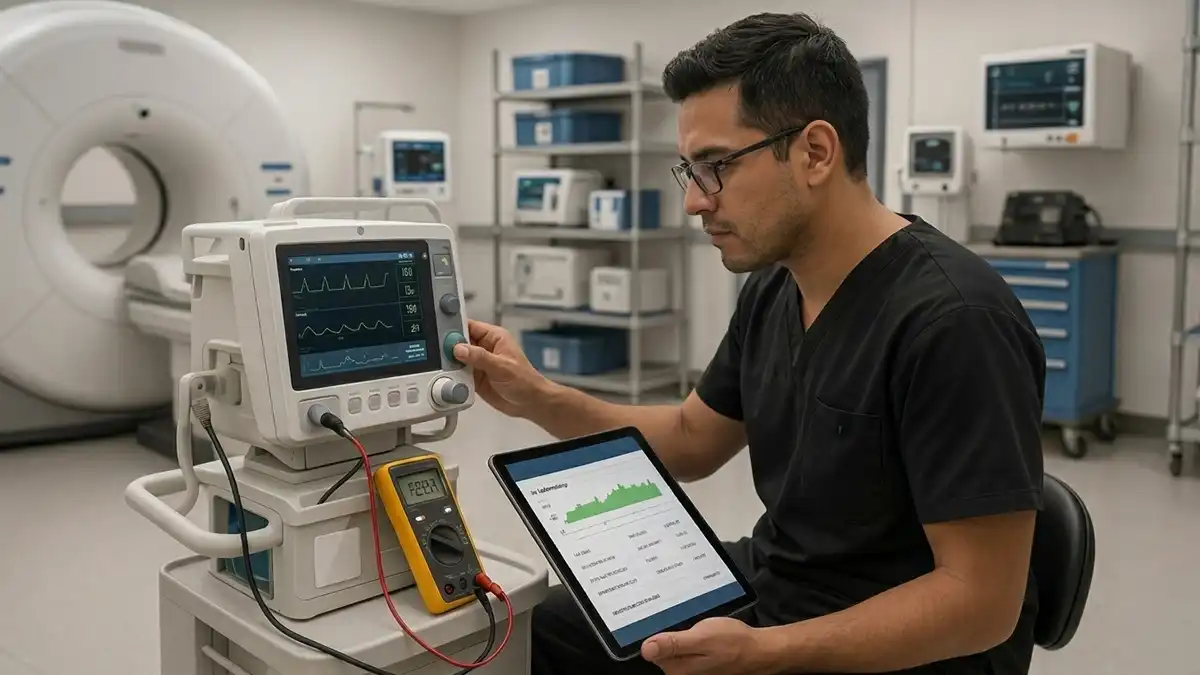
How Biomedical Devices Work
Every reading on a medical device starts with the measurand-a signal from the human body like heartbeat or pressure.
A sensor captures this signal and converts it into electrical form, but its often weak and noisy. The electronic instrumentation then cleans and strengthens it, making it usable.
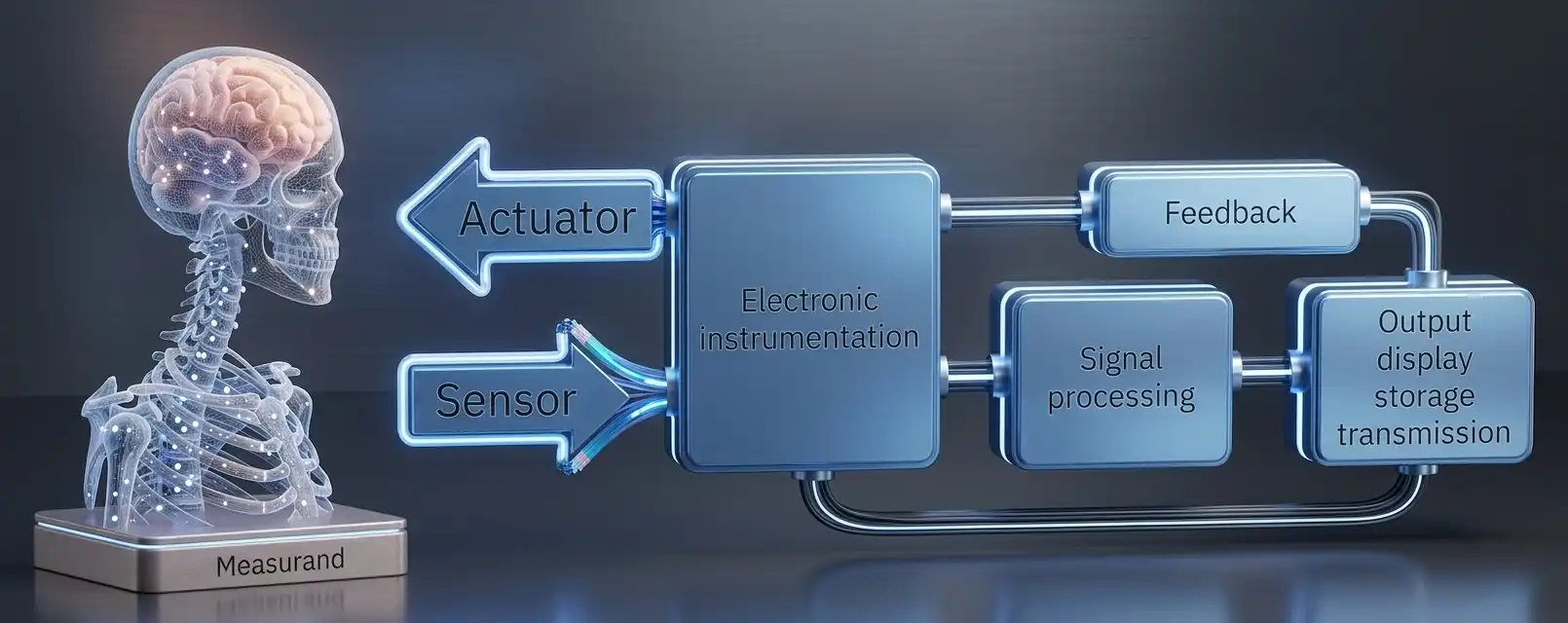
Next, signal processing interprets the data and turns it into meaningful values.
This information is shown on the screen, stored, or transmitted. In advanced systems, a feedback loop continuously adjusts the device, with actuators responding in real time.
From the outside, its just a number.
Inside, it’s a chain:
Patient signal → Sensor Conditioning → Processing Output → Feedback
And if even one link fails, the entire system can give wrong results—or stop completely.
Where Failures Really Begin
Sensor-Level Issues
- - Gradual calibration drift
- - Signal distortion
- - Environmental damage
Result: Wrong readings, false alarms
PCB & Electronic Failures
- - Burnt components
- - Weak solder joints
- - Moisture or corrosion damage
Result: Device stops or behaves unpredictably
Power Supply Problems
- - Capacitor aging
- - Voltage fluctuations
- - SMPS failure
Result: Sudden shutdown or no power
Firmware & Logic Errors
- - Corrupted memory
- - Software glitches
- - System crashes
Result: Frozen screens, non-responsive systems
What Failure Looks Like in Real Hospitals
A Ventilator Suddenly Stops
It wasnt the whole machine. Just a failing power component causing instability. The system detected risk and shut down to protect the patient.
A Patient Monitor Shows Wrong Values
The issue: Sensor drift and signal noise. The device was working—but not accurately.
A Monitor Freezes Mid-Operation
Not hardware, but a firmware issue that halted processing.
What Actually Happens During a Professional Repair
Step 1: Identify the Real Fault
You don’t just fix symptoms. Signals are traced, boards are tested, and the exact failure point is identified.
Step 2: Component-Level Repair
- - Faulty ICs are replaced
- - Power circuits are restored
- - Sensors are repaired or recalibrated
This approach is more precise and cost-effective.
Step 3: Restore Logic & Firmware
- - Firmware reinstallation
- - System error correction
- - Functional restoration
Step 4: Calibration & Accuracy Check
Working is not enoughit must be accurate.
Step 5: Final Testing Before Return
- - Performance validation
- - Safety checks
- - Real-condition simulation
Only then is the equipment returned to service.
Why Repair Instead of Replace?
- - Replacement is expensive
- - Lead times cause delays
- - Many failures involve small, repairable components
Component-level repair:
- - Saves cost
- - Reduces downtime
- - Extends equipment life
The Bigger Picture: Every Failure Has a Story
A biomedical device never fails instantly.
It progresses through stages: Minor fault → signal issue system instability shutdown Understanding this chain separates temporary fixes from real engineering solutions.
Why Healthcare Facilities Trust Epoch
- - Precise component-level repair
- - Advanced diagnostics
- - Support for new and obsolete systems
- - Clear, transparent service approach
Final Thoughts
In healthcare, equipment failure is not just downtime—it’s risk.
Behind every failure is a technical story waiting to be understood and solved.
The focus is simple: Find the root cause. Fix it precisely. Restore reliability.
Need Reliable Biomedical Equipment Repair?
If your equipment is:
- - Showing incorrect readings
- - Shutting down unexpectedly
- - Not powering on
- - Freezing or malfunctioning
Don’t wait for complete failure. Get expert diagnostics and component-level repair from Epoch Technical today.