







In industrial environments, electronics dont fail quietly-they stop production.
A single faulty PCB inside a drive, PLC, HMI, or power supply can shut down an entire line. Deadlines get missed. Output drops. Maintenance teams feel the pressure.
But here’s the reality: most industrial PCBs don’t need replacement. They need proper diagnosis and precision repair.
At Epoch Technical, PCB repair isn’t just soldering components-it’s structured fault analysis, controlled rework, and reliability validation. Lets break down how professional industrial PCB repair is actually done.
Understanding Industrial PCB Failures
Unlike consumer electronics, industrial PCBs operate in:
- - High temperatures
- - Electrical noise environments
- - Vibration-heavy installations
- - High current switching conditions
Over time, this leads to:
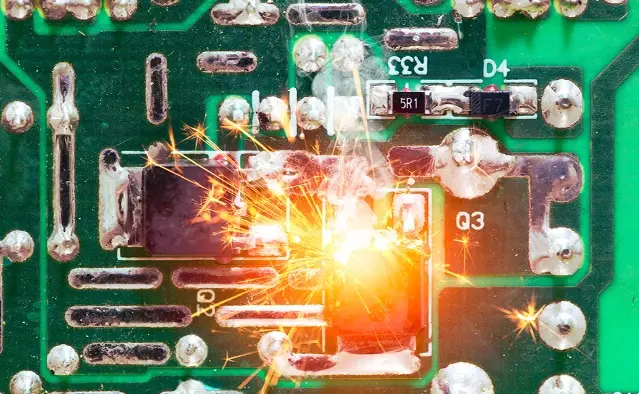
- - Burnt MOSFETs and IGBTs
- - Failed capacitors
- - Shorted regulators
- - Cracked solder joints
- - Lifted pads from thermal stress
The key difference between amateur repair and industrial repair?
Root cause diagnosis before component replacement.
Surface Mount Rework: Precision Over Speed
Modern industrial boards are densely packed with SMD components-from tiny resistors to complex microcontrollers and BGAs.
Reworking them requires discipline.
Controlled Heat Is Everything
Excess heat can:
- - Lift pads
- - Delaminate multilayer boards
- - Damage nearby ICs
Best practice includes:
- - Preheating the board to reduce thermal shock
- - Using controlled hot-air stations with calibrated temperature profiles
- - Avoiding prolonged soldering iron contact
Industrial PCBs are often multilayer. Once internal vias are damaged, repair becomes significantly more complex.
Flux, Cleaning & Solder Discipline
Flux isn’t optional-it ensures proper wetting and reduces oxidation.
Good rework technicians:
- - Use high-quality no-clean flux
- - Avoid excessive solder
- - Inspect under magnification
- - Clean residues to prevent long-term corrosion
A clean board is not cosmetic it’s reliability assurance.
Pad & Trace Reconstruction
In industrial repairs, we often encounter:
- - Burned copper traces
- - Lifted SMD pads
- - Carbonized PCB substrate
Professional repair techniques include:
- - Micro-jumper wire restoration
- - Copper foil pad reconstruction
- - Reinforced epoxy bonding
These techniques restore both electrical and mechanical integrity.
How Multimeters & Oscilloscopes Actually Save Boards
Many failures are misdiagnosed because only visual inspection is performed.
Serious PCB repair starts with instruments.
The Multimeter: First-Line Fault Isolation
A digital multimeter helps identify:
- - Short circuits in power rails
- - Open circuits in signal traces
- - Faulty diodes or MOSFET junctions
- - Irregular voltage regulation
For example:
If a 24V industrial control board keeps tripping, a resistance test across the input rail can immediately indicate whether the issue is a downstream short or a failed protection device.
It’s fast, simple, and often reveals 50% of the fault story.
The Oscilloscope: Seeing What the Multimeter Cannot
Some boards look fine but still fail in operation.
This is where oscilloscopes become critical.
They help detect:
- - Noisy PWM signals
- - Missing clock pulses
- - Distorted communication waveforms (I²C, SPI, CAN)
- - Ripple in power supply outputs
We’ve seen cases where a PLC board was replaced twice only to discover via oscilloscope that a distorted oscillator signal was causing unstable CPU behavior.
Without waveform analysis, that fault would never have been identified.
Best Practices That Separate Professional Repair from Trial-and-Error
Industrial PCB repair must be systematic.
Document Before Touching
Always capture high-resolution images before rework. It prevents orientation mistakes and missing component placements.
ESD Protection Is Mandatory
Static discharge silently destroys microcontrollers and logic ICs. Proper grounding, mats, and wrist straps are non-negotiable.
Incremental Testing
Test after each repair stage:
- - Check resistance
- - Power up with current limiting
- - Monitor thermal behavior
Never replace multiple components at once without staged validation.
Limit Rework Cycles
Every heating cycle weakens solder pads and vias. Precision matters more than speed.
Real Case Examples: When PCB Repair Saved Major Downtime
Case Study 1: Servo Drive Logic Board Failure
A manufacturing plant faced repeated servo shutdowns. OEM replacement lead time: 6–8 weeks.
Diagnosis revealed:
- - Stable power rails
- - Corrupted PWM output waveform
Oscilloscope testing identified a failed gate driver IC.
After replacement and waveform validation, the board was restored within 48 hours.
Downtime saved: Significant production loss avoided.
Case Study 2: Power Supply PCB Short Circuit
A power control board was tripping immediately on startup.
Multimeter testing showed:
- - Direct short on output rail
- - Low resistance across MOSFET legs
Thermal imaging confirmed a localized hotspot.
After replacing the damaged MOSFET and reinforcing a burned trace, the board passed load testing.
Replacement cost avoided: Entire power module assembly.
Why Industrial PCB Repair Requires Expertise
Industrial electronics are not hobby circuits.
They involve:
- - High voltage sections
- - Isolation boundaries
- - Sensitive logic domains
- - Multi-layer board construction
A mistake doesn’t just damage a board-it can damage connected systems.
That’s why structured diagnostic methodology, precision tooling, and validation testing matter.
Final Thoughts
Industrial PCB repair is not just about “making it work again.” It’s about restoring full performance, ensuring long-term reliability, and preventing repeat failures that lead to costly downtime. With proper surface mount rework techniques, disciplined use of multimeters and oscilloscopes, and structured diagnostic best practices, most industrial boards can be restored to full operational integrity.
When downtime can cost thousands per hour, accurate fault diagnosis and precision repair become a true competitive advantage. At Epoch Technical, our team focuses on precision diagnostics, component-level repair, and rigorous quality testing to ensure every industrial PCB we service meets high performance and reliability standards.