







Modern industrial automation systems depend on precision. Industries operating CNC machines, robotic systems, packaging lines, conveyor automation, and high-speed production equipment require accurate motion control to maintain production quality and operational efficiency.
Servo motors play a critical role in this process. They control position, speed, torque, and synchronization with high accuracy, ensuring machines operate smoothly and consistently.
However, when servo motor performance begins to decline, production quality is directly affected.
A small encoder deviation, unstable torque response, or minor vibration may initially appear insignificant, but over time these issues lead to dimensional inaccuracies, inconsistent output quality, increased rejection rates, and unexpected downtime.
Professional servo motor repair helps restore motion accuracy, improve machine reliability, and maintain stable industrial automation performance.
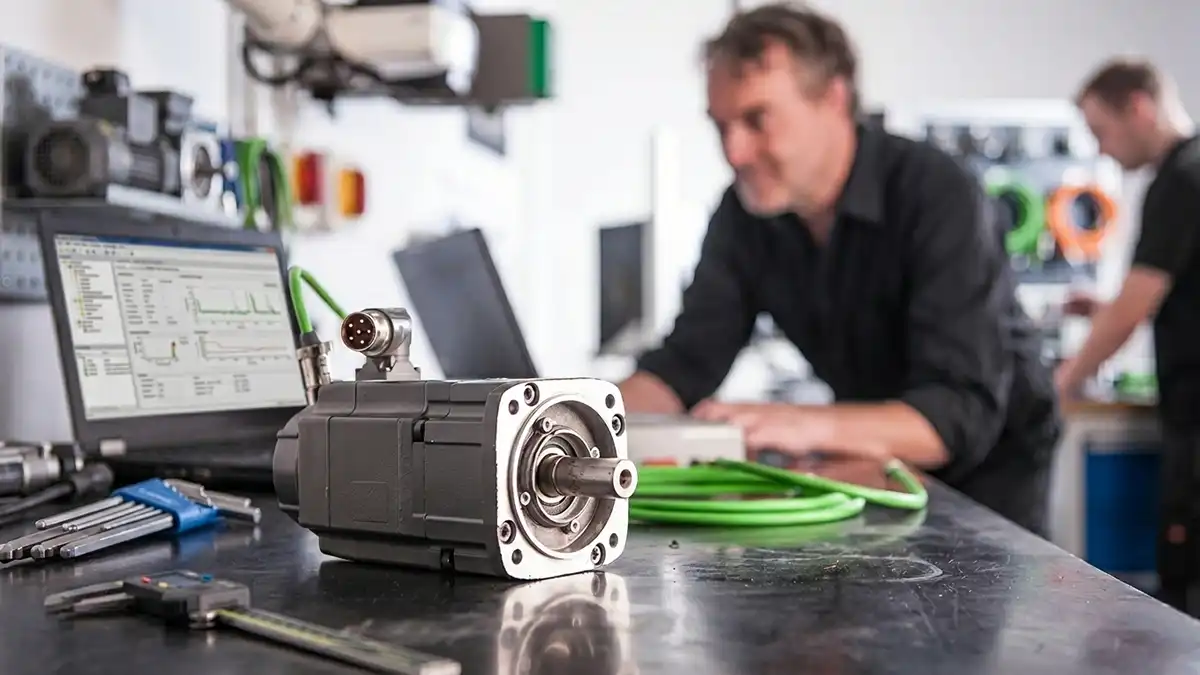
Why Servo Motors Are Important in Industrial Automation
Servo motors are one of the most essential components in modern automation systems. Unlike conventional motors, servo systems continuously monitor feedback signals to maintain accurate positioning and movement under varying operating conditions.
Servo motors are widely used in:
- - CNC machining centers
- - Robotic automation systems
- - Packaging machinery
- - Textile manufacturing equipment
- - Printing machines
- - Conveyor systems
- - Food processing lines
- - Pharmaceutical production systems
These industries rely on servo motors for:
- - Accurate positioning
- - Stable torque control
- - High-speed synchronization
- - Smooth machine operation
- - Consistent production quality
When servo motors operate correctly, production systems achieve high repeatability and reliable performance. However, declining servo motor accuracy can gradually affect the entire automation process.
Common Servo Motor Problems That Affect Production Accuracy
Servo motors rarely fail suddenly. In most industrial environments, performance degradation happens gradually over time.
Encoder Feedback Problems
Encoders provide positional feedback to the servo control system. When encoder signals become unstable or inaccurate, machines lose positioning precision.
This can result in:
- - CNC machining errors
- - Product misalignment
- - Poor repeatability
- - Inconsistent dimensions
- - Synchronization problems
Even a small encoder error can affect production quality in high-speed automation systems.
Bearing Wear and Vibration
Servo motor bearings operate continuously under demanding industrial conditions. Over time, worn bearings create shaft instability and vibration.
This often causes:
- - Surface finish defects
- - Increased operational noise
- - Irregular machine movement
- - Reduced positioning accuracy
Mechanical vibration also increases wear on connected automation components.
Overheating and Thermal Stress
Continuous industrial operation generates heat inside servo motors. Excessive thermal stress can damage windings, insulation, and internal components.
Common symptoms include:
- - Torque instability
- - Speed fluctuation
- - Servo drive alarms
- - Unexpected machine stoppages
If not addressed early, overheating can lead to complete motor failure.
How Servo Motor Issues Impact Industrial Production
Industrial automation systems depend on stable and repeatable movement. When servo motor precision drops, machines continue operating, but production quality becomes inconsistent.
Manufacturers may begin experiencing:
- - Dimensional inaccuracies
- - Product rejection
- - Surface finish defects
- - Batch variation
- - Frequent operator adjustments
- - Increased material waste
In CNC machining, servo instability affects cutting accuracy and tolerance control.
In packaging systems, motion-control issues can create sealing, labeling, and filling errors.
In robotic automation, positioning drift affects synchronization and operational precision.
These issues increase operational costs while reducing production efficiency and customer satisfaction.
The Industrial Servo Motor Repair Process
Professional servo motor repair involves more than replacing damaged components. The goal is to identify the root cause of motion instability and restore long-term operational reliability.
A complete repair process typically includes:
- - Detailed fault diagnosis
- - Encoder signal analysis
- - Bearing inspection and replacement
- - Shaft alignment testing
- - Rotor balancing
- - Thermal performance evaluation
- - Insulation resistance testing
- - Dynamic load testing
Advanced diagnostics help engineers identify hidden performance problems before catastrophic failure occurs.
After repair, the servo motor is tested under operating conditions to ensure:
- - Accurate positioning
- - Stable torque output
- - Smooth motion control
- - Reliable repeatability
- - Consistent automation performance
This process is critical for maintaining precision in high-speed industrial production systems.
Why Professional Servo Motor Repair Matters
Replacing industrial servo motors is often expensive and unnecessary. In many cases, professional repair services can restore the motor to reliable operating condition while reducing replacement costs.
Professional repair helps restore:
- - Encoder accuracy
- - Mechanical stability
- - Motion precision
- - Thermal efficiency
- - Torque consistency
More importantly, early repair prevents unexpected automation breakdowns that can disrupt production schedules and create costly downtime.
For industries operating continuously, minimizing downtime is essential for maintaining productivity and profitability.
Industries That Depend on Servo Motor Precision
Servo motors are widely used across industrial automation sectors where accurate movement and synchronization are essential.
CNC Manufacturing
CNC machines require precise positioning for cutting, milling, drilling, and surface finishing operations. Servo motor instability directly affects machining quality.
Packaging and Processing
Packaging automation systems rely on synchronized motion for sealing, filling, labeling, and wrapping processes. Servo inaccuracies reduce packaging consistency and efficiency.
Robotics and Automated Assembly
Industrial robots depend entirely on servo-controlled movement systems. Poor servo performance can create motion errors, synchronization failures, and reduced automation reliability.
Signs Your Servo Motor Requires Inspection
Industrial facilities should schedule professional inspection if they notice:
- - Increased vibration
- - Unusual motor noise
- - Servo drive fault alarms
- - Positioning inaccuracies
- - Excessive motor heat
- - Inconsistent machine movement
- - Higher rejection rates
Addressing these issues early helps prevent major automation failures and extended downtime.
Why Industries Choose Epoch Technical for Servo Motor Repair
Epoch Technical provides industrial automation and servo motor repair solutions for manufacturing industries across the UAE.
The engineering team supports industrial facilities with:
- - Servo motor repair
- - Encoder calibration
- - Motion-control diagnostics
- - CNC automation support
- - Industrial electrical maintenance
The repair process focuses on restoring production accuracy, reducing downtime, and improving machine reliability.
By combining technical diagnostics with precision repair procedures, industries can maintain stable automation performance while reducing operational losses.
Final Thoughts
Industrial automation systems rely on precise motion control and stable machine performance. When servo motors begin losing accuracy, production quality, efficiency, and reliability are directly affected.
Professional servo motor repair restores the precision required for reliable automation performance while helping industries reduce downtime, improve operational efficiency, and maintain consistent production quality.
For modern manufacturing environments, proactive servo motor maintenance is essential for long-term productivity and operational stability.