







Flame Scanner Repair & Troubleshooting Guide: Causes, Fixes, and When to Call a Specialist
If your flame scanner is throwing nuisance burner trips, failing to detect a genuine flame, or reporting flame after the burner has shut down, you're dealing with one of the most safety-critical components in your combustion system. This guide walks through how flame scanners work, why they fail, how to keep them running reliably, and how to decide between repair and replacement with input from the engineers who repair these units every week.
Flame scanners are found across the industries Epoch Technical serves most, particularly oil and gas processing and metals and steel production, where burner uptime is directly tied to output.
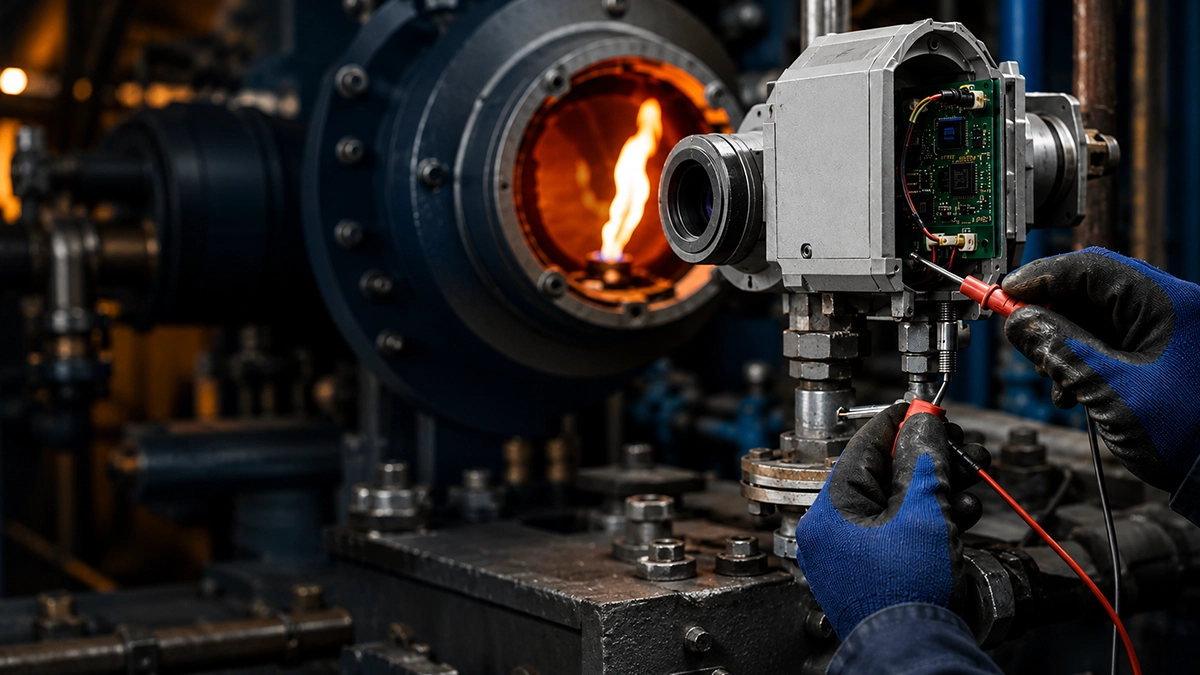
What a Flame Scanner Actually Does
A flame scanner is the sensor that continuously verifies a burner flame is present and reports that status to the Burner Management System (BMS). The BMS typically built around PLC logic and I/O modules that read the scanner's signal uses this input to decide whether fuel should keep flowing. The moment the scanner loses a valid flame signal, it tells the BMS to cut fuel before an unburned fuel buildup becomes an explosion risk.
Most industrial scanners don't just report "flame" or "no flame" as a simple switch. They measure flame signal strength and flicker frequency against a trip threshold, and many include self-check (dynamic check) circuitry that periodically shutters the sensor to confirm it can still register a loss of flame a safety function worth knowing about if you're troubleshooting a unit that seems to "pass" but still trips randomly.
Types of Flame Scanners
| Type | How it detects | Best suited for | Watch-outs |
|---|---|---|---|
| UV (Ultraviolet) | Detects UV radiation from the flame | Gas and light oil flames | Prone to false detection from other flames, arc welding, or lightning in the area. |
| IR (Infrared) | Detects infrared/heat radiation | Heavy oil, coal, and solid fuel flames | Sensitive to hot refractory glow and radiant heat from adjacent equipment. |
| UV/IR Combination | Cross-checks both signals | Multi-fuel burners, higher reliability requirements | Higher cost and more complex calibration. |
| Visible Light Detectors | Detects visible flame luminosity | Simpler pilot and single-burner setups | More prone to nuisance tripping from ambient light or other radiant sources; less common in large multi-burner furnaces. |
Common Flame Scanner Problems ( and What's Really Causing Them )
1. Flame Not Detected
The burner is firing normally, but the scanner reports no flame. Usual suspects:
- ● Dirty or coated optical lens
- ● Blocked or malfunctioning cooling/purge air line ( a frequently overlooked cause of both dirty optics and sensor overheating )
- ● Failed UV/IR sensor element
- ● Misalignment after maintenance or vibration
- ● Damaged signal wiring or a failed connector
2. False Flame Detection
The scanner keeps reporting "flame present" after the burner is off a serious safety issue that warrants immediate inspection, not scheduling for later. Causes include:
- ● Contaminated optics
- ● Electrical interference on the signal cable
- ● Failed PCB components or an unstable power supply circuit
- ● Cross-firing the scanner picking up radiation from a neighboring burner or glowing refractory in multi-burner furnaces and cement kilns, especially with UV scanners lacking proper shielding
3. Intermittent Burner Trips
Random shutdowns usually point to an unstable signal rather than a dead sensor:
- Loose electrical connections
- ● Moisture ingress into the scanner housing
- ● Damaged or degraded cabling
- ● Aging electronic components drifting out of tolerance
- ● Excessive vibration at the mounting point
Preventive Maintenance That Actually Reduces Trips
Keep the lens clean. Use a lint-free cloth and an approved optical cleaning solution — never abrasive materials that can scratch the lens coating.
Check the purge/cooling air system. A blocked purge line is one of the most common root causes of dirty optics and heat-related sensor failure, yet it's often skipped during routine checks.
Inspect wiring. Look at cable insulation, connector tightness, grounding, and any signs of overheating or corrosion.
Verify alignment. Confirm the scanner has a direct, unobstructed line of sight to the flame and that mounting brackets haven't loosened from vibration.
Run a functional test. Confirm the scanner detects flame promptly, holds a stable signal, responds correctly to simulated flame loss, and doesn't generate false alarms including a check of the self-check/dynamic-check function if the model has one.
Repair or Replace?
Repair is usually the smarter call when:
- The housing is physically intact
- ● Only internal electronics ( PCB, sensor, power supply ) have failed
- ● The model is obsolete or replacement units have long lead times
- ● Minimizing downtime matters more than buying new
One caveat for hazardous-area installations: if your scanner carries an ATEX or hazardous-location ( hazloc ) certification, repair must preserve that certification a repair that doesn't account for this can leave you with a unit that's technically non-compliant for the environment it's installed in. Always confirm this with your repair partner before reinstalling.
Replacement generally makes more sense only when the housing has suffered serious physical damage or the unit is genuinely beyond economical repair.
What a Proper Flame Scanner Repair Should Include
A qualified repair not just a swap should cover:
- ● Complete fault diagnosis down to component level
- ● PCB-level repair rather than board replacement where possible
- ● Optical sensor testing
- ● Full calibration
- ● Functional testing under simulated operating conditions
- ● Documented quality assurance before the unit ships back
Flame Scanner Repair at Epoch Technical
Epoch Technical is an ISO 9001:2015 certified repair specialist serving Dubai, Sharjah, Abu Dhabi, and 25+ countries, with a dedicated flame scanner, gas detector, ignitor & industrial control repair service covering flame scanners, gas detectors, ignitor modules, and burner management system electronics.
Our process for every unit:
- ● Initial assessment and transparent quotation, with a clear cost breakdown before any work begins
- ● Component-level diagnosis using in-house diagnostic equipment
- Precision repair using genuine OEM parts where required
- ● Full calibration and functional testing before delivery
- ● Warranty coverage on completed repairs
This is part of a broader range of repair services covering VFDs, PLCs, servo drives, HMIs, and CNC electronics — so if a burner fault turns out to involve a drive, controller, or display alongside the scanner, the same team can handle it.
Whether your scanner is obsolete, recently failed, or throwing intermittent trips you can't pin down, our engineers can diagnose it and get you a clear repair-vs-replace recommendation often faster and at lower cost than sourcing a new unit. Learn more about our approach on our about page.
Request a flame scanner assessment →Frequently Asked Questions
Find answers to common questions about flame scanner inspection, repair, maintenance, and troubleshooting.
Conclusion
A flame scanner is a small component with an outsized safety role. Routine lens cleaning, purge-air checks, wiring inspections, and scheduled functional tests catch most failures before they cause an unplanned shutdown. When something does fail, component-level repair done by a specialist who understands both the electronics and the safety-certification requirements is usually the faster, cheaper path back to reliable operation.
Get an assessment from Epoch Technical's engineering team →