







In modern industrial facilities, production systems are expected to run continuously. Even a short interruption can affect productivity, delay deliveries, and increase operational costs. When a control system stops working, the entire production line may come to a halt.
At the heart of most automated systems is the PLC. It controls machines, coordinates processes, and ensures that every part of the system works together. When a PLC develops a fault, troubleshooting quickly becomes critical.
This is where the diagnostic capabilities of Siemens PLCs become extremely valuable. These controllers are designed not only to run machines but also to constantly monitor their own health and the status of connected devices. With the help of engineering software like TIA Portal, technicians can quickly understand what went wrong and resolve the issue faster.
For industrial service providers such as Epoch Technical, these diagnostic tools play an important role in identifying faults accurately and restoring automation systems with minimal downtime.
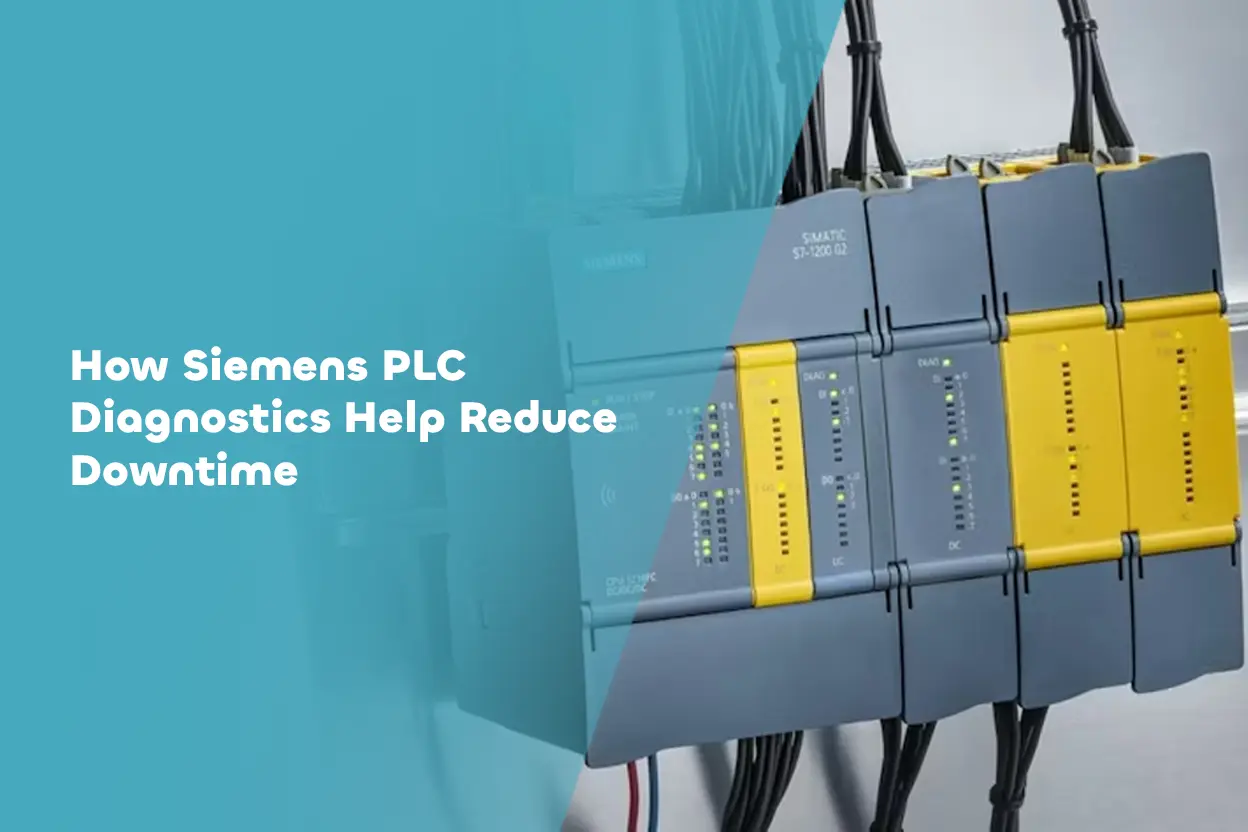
Understanding PLC Diagnostics in Siemens Systems
A PLC acts as the central controller of an industrial process. It receives signals from sensors, processes logic based on the program, and sends commands to equipment such as motors, valves, and drives.
During operation, the PLC constantly monitors several parts of the system, including:
Unlike consumer electronics, industrial PCBs operate in:
- - Input and output modules
- - Communication networks
- - CPU performance
- - Power supply conditions
- - Responses from field devices
If something abnormal happens, the PLC records a diagnostic message that indicates where the issue occurred.
For maintenance engineers, this information is extremely useful. Instead of manually checking every component in the control panel, technicians can focus directly on the area where the fault originated.
During many repair projects handled by Epoch Technical, diagnostic data from the PLC helps engineers determine whether the problem lies in the CPU module, I/O circuitry, or communication interface. This allows faster repair and reduces unnecessary component replacement.
Major Siemens PLC Series Used in Industrial Automation
Many industries rely on controllers from the Siemens SIMATIC automation family. Different PLC series are designed for different levels of automation, but they all include diagnostic features that help engineers detect problems quickly.
SIMATIC S7-1200
The SIMATIC S7-1200 is commonly used in small and mid-scale automation systems such as packaging machines, conveyor systems, and assembly equipment.
This controller offers several built-in diagnostic features, including:
- - Automatic system diagnostics
- - Clear fault messages in engineering software
- - Monitoring of communication networks
- - Integrated web server for system status monitoring
Because of its compact design and easy configuration through TIA Portal, the S7-1200 is widely used in modern machine automation.
SIMATIC S7-1500
For larger and more complex automation systems, many industries use the SIMATIC S7-1500.
This high-performance PLC is designed for demanding production environments such as automotive manufacturing, large assembly lines, and process control systems.
Some of its important diagnostic capabilities include:
- - Integrated system diagnostics directly in the CPU
- - Advanced signal monitoring and trace functions
- - Detailed event logs with time stamps
- - High-speed communication diagnostics via PROFINET networks
These features allow engineers to identify faults faster and maintain stable system operation.
SIMATIC S7-300 and SIMATIC S7-400
Although newer PLC families are widely used today, many industrial plants still operate with SIMATIC S7-300 and SIMATIC S7-400 systems.
These controllers have been used for many years in industries such as:
- - Power generation
- - Chemical processing
- - Oil and gas facilities
- - Large manufacturing plants
Even though they are considered legacy systems, their diagnostic capabilities still provide valuable information about module failures, communication issues, and system faults.
When these older PLC modules fail, repair specialists like Epoch Technical can often restore them through component-level repair, helping industries avoid expensive system replacements.
Detecting Problems Before They Become Failures
One of the biggest advantages of Siemens PLC diagnostics is the ability to detect potential problems early.
Instead of waiting for a machine to stop completely, the PLC can identify warning signs such as:
- - Unstable communication signals
- - Failing I/O modules
- - Irregular voltage conditions
- - Abnormal CPU cycle behavior
These warnings allow maintenance teams to investigate the issue before it leads to a full production shutdown.
Early detection is extremely valuable in industries where continuous operation is critical.
Faster Troubleshooting with Clear Diagnostic Information
When a fault occurs in an automation system, the most difficult task is often locating the exact cause.
Siemens PLCs simplify this process by recording detailed diagnostic information such as:
- - The type of fault
- - The affected module
- - The exact time the event occurred
- - The location of the error within the PLC system
With this information, engineers can identify the faulty component much faster.
In many cases handled by Epoch Technical, this diagnostic data helps technicians trace the problem down to specific electronic components on the PLC board. Once the issue is isolated, targeted repair can be performed instead of replacing the entire module.
Supporting Predictive Maintenance
Modern industries are moving away from reactive maintenance and adopting predictive maintenance strategies.
Rather than waiting for equipment to fail, engineers monitor system behavior to detect gradual changes that may indicate upcoming problems.
Siemens PLC diagnostics support this approach by helping engineers observe patterns such as:
- - Recurring communication errors
- - Intermittent module faults
- - Unusual signal fluctuations
- - Increasing processor load
By analyzing these patterns, maintenance teams can schedule repairs during planned downtime instead of responding to unexpected failures.
Integration with Monitoring and SCADA Systems
Another advantage of Siemens PLC diagnostics is their ability to integrate with plant monitoring systems.
Diagnostic information can be shared with:
- - SCADA platforms
- - Operator interfaces (HMIs)
- - Maintenance monitoring systems
This allows operators to receive real-time alerts when faults occur and respond immediately. Maintenance teams can also review historical diagnostic data to identify recurring issues and improve system reliability.
A Practical Example from the Field
Imagine a production line that occasionally stops because a motor drive fails to respond.
Without diagnostic tools, technicians may spend hours checking wiring, sensors, drives, and PLC modules to locate the problem.
With Siemens PLC diagnostics enabled, the controller can quickly indicate whether the fault comes from:
- - An I/O module
- - A communication network
- - A drive feedback signal
This allows technicians to focus directly on the faulty component.
In many situations, repair engineers at Epoch Technical can repair the affected PLC module rather than replacing it completely, allowing the production system to return to operation much faster.
Document Before Touching
Always capture high-resolution images before rework. It prevents orientation mistakes and missing component placements.
Conclusion
In industrial automation, even a few minutes of downtime can have a significant impact on production.
The diagnostic capabilities built into Siemens PLC systems -including the SIMATIC S7- 1200, S7-1500, S7-300, and S7-400-help engineers detect problems early, troubleshoot faults more efficiently, and support predictive maintenance strategies.
For companies that rely heavily on automation, working with experienced repair specialists like Epoch Technical ensures that PLC faults are diagnosed accurately and repaired quickly. With proper diagnostics and expert repair services, industries can keep their automation systems running smoothly and minimize costly production interruptions.