







ABB ACS580 Fault Codes: What They Mean and How to Fix Them
VFD troubleshooting guide · By Epoch Technical team · 10 November 2026ABB ACS580 variable frequency drives (VFDs) are widely used in industrial applications such as pumps, fans, compressors, conveyors and HVAC systems. They provide efficient motor speed control and keep industrial processes running reliably.
However, electrical disturbances, mechanical overloads, incorrect parameter settings and internal component failures can all cause unexpected drive trips. Most of these can be fixed on site. The rest need professional VFD repair in Dubai or elsewhere in the UAE.
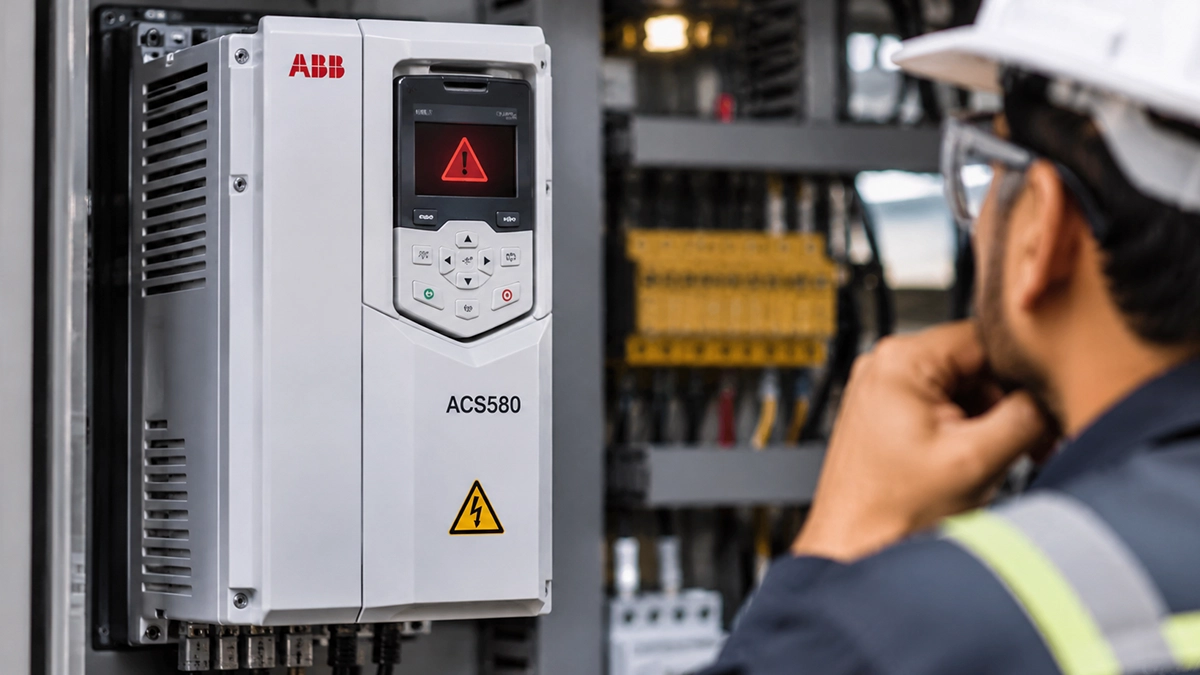
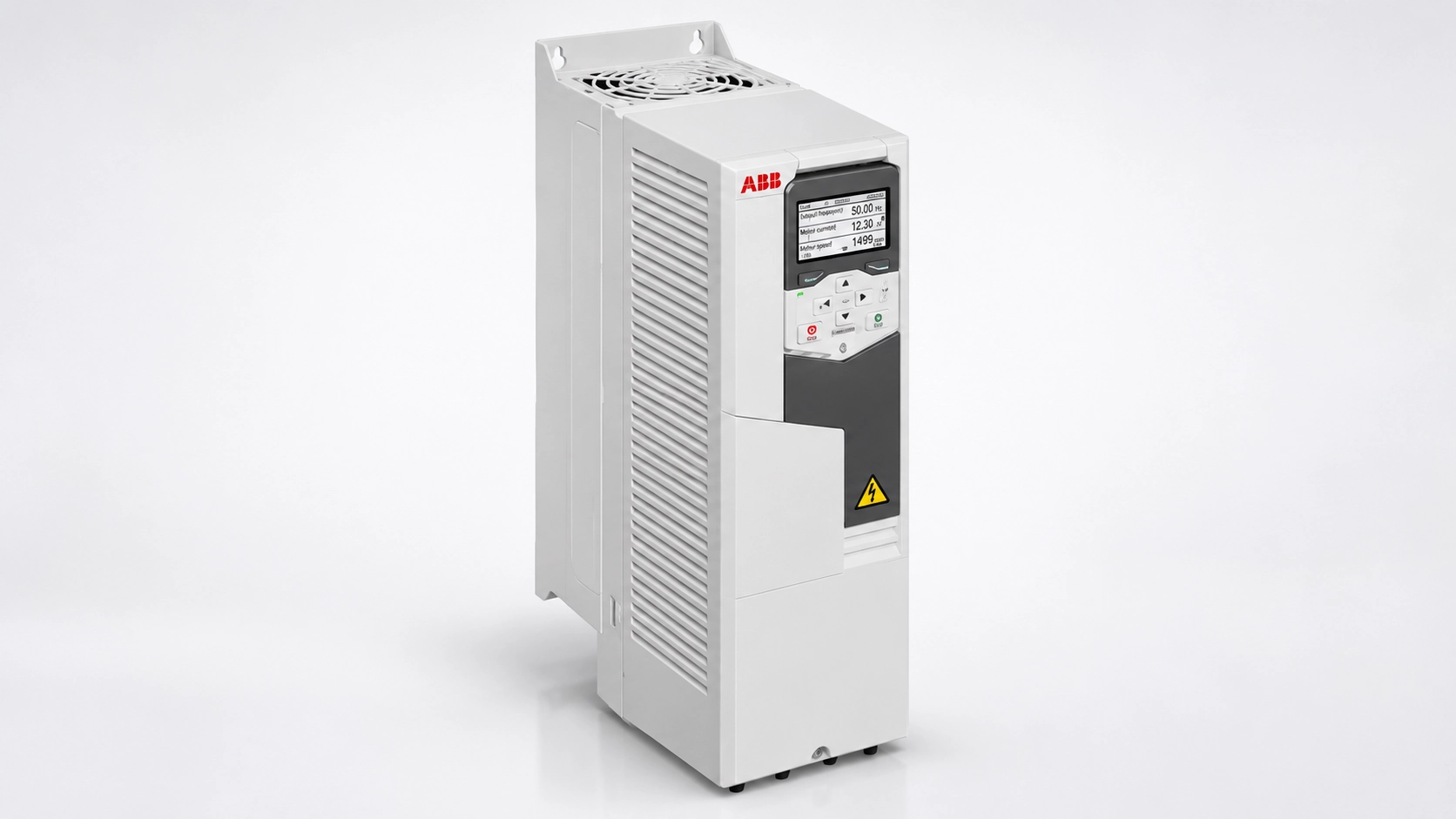
Understanding ABB ACS580 fault codes helps maintenance technicians identify problems, reduce equipment downtime and prevent further damage. This guide explains the most common ACS580 faults, their likely causes and practical troubleshooting steps, including the frequently encountered Fault 2310 (Overcurrent).
Understanding ABB ACS580 Fault Codes
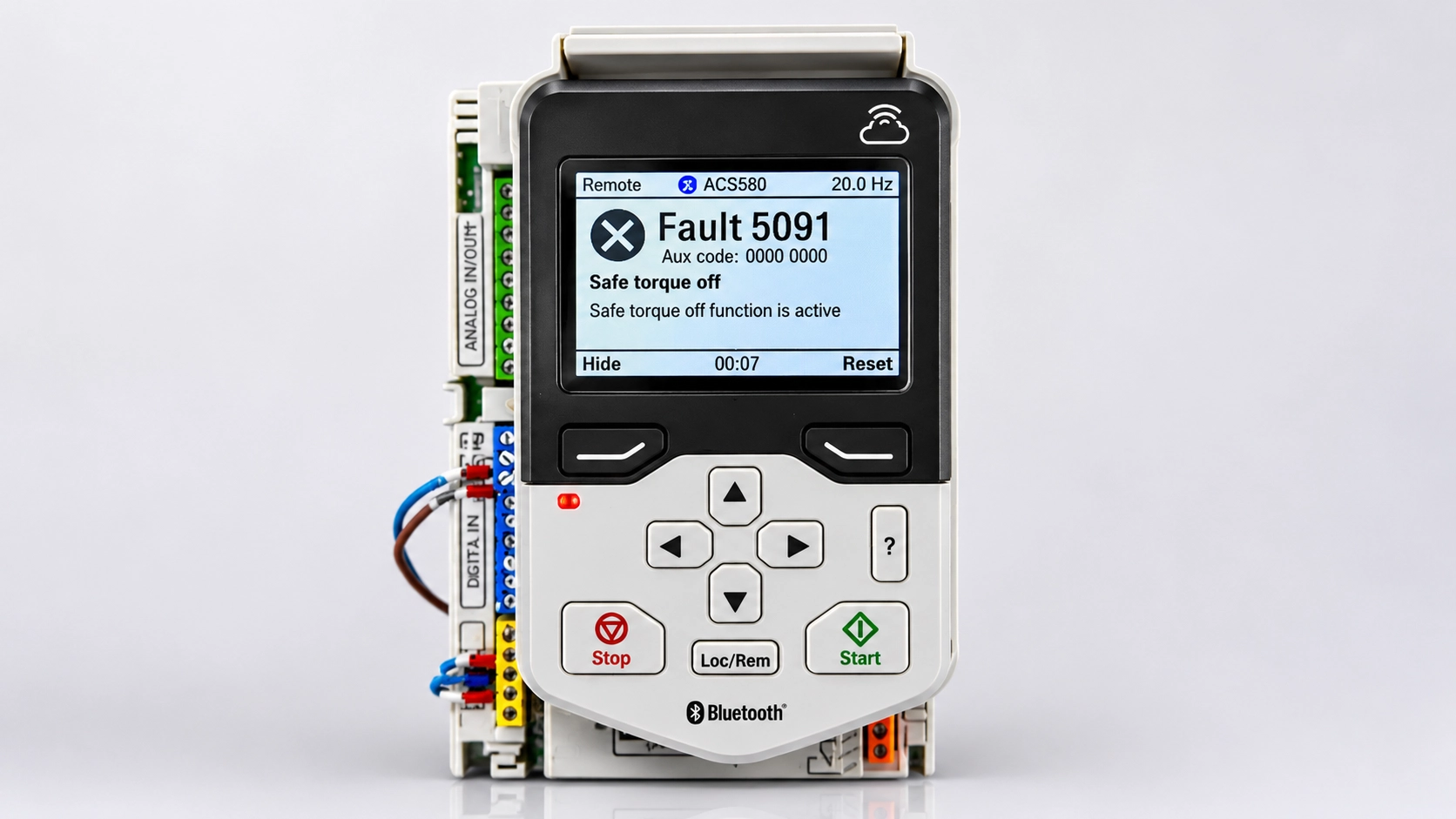
The ACS580 continuously monitors operating conditions such as motor current, DC bus voltage, drive temperature and the incoming supply. When it detects an abnormal condition, it shows a warning or a fault on its control panel.
- Warning: an abnormal condition that may need attention. The drive can continue operating.
- Fault: a condition that trips the drive and stops normal operation.
Before resetting a fault, record the fault code, the auxiliary code and the operating conditions at the time of the trip. Earlier faults and warnings are stored in the Event log, which you can open from the Menu on the control panel. This history often shows the real cause.
Common ABB ACS580 Fault Codes and Solutions
These are the fault codes technicians meet most often during ACS580 maintenance.
| Code | Fault | Likely cause | First check |
|---|---|---|---|
| 2310 | Overcurrent | Motor overload, short circuit or too-fast acceleration | Load, ramp time, motor data |
| 2330 | Earth leakage | Motor or cable insulation fault | Insulation test of motor and cable |
| 2340 | Short circuit | Short circuit in the motor or output cable | Motor windings and cable |
| 2381 | IGBT overload | Output current too high for the drive rating | Load and drive sizing |
| 3130 | Input phase loss | Missing incoming supply phase | Supply voltages, fuses, breaker |
| 3181 | Cross connection | Supply and motor cables connected the wrong way round | Input and output wiring |
| 3210 | DC link overvoltage | Too much regenerative energy, often during fast deceleration | Deceleration time, braking |
| 3220 | DC link undervoltage | Low or interrupted incoming supply | Supply voltage and connections |
| 3381 | Output phase loss | Motor cable or connection problem | Motor terminals and cable |
| 4310 | Excess temperature | Cooling failure or excessive loading | Fans, heatsink, cabinet airflow |
| 5090 | STO hardware failure | Fault in the Safe torque off circuit or hardware | STO wiring; drive may need service |
| 5091 | Safe torque off | STO safety circuit activated | Safety circuit and relay |
| 6681 | Fieldbus communication loss | Embedded fieldbus link interrupted | Fieldbus cable, settings, master |
| 7081 | Control panel loss | Control panel set as control location stopped communicating | Panel connection and cable |
| 7121 | Motor stall | Motor overloaded or stalled | Mechanical load, stall settings |
| 7310 | Overspeed | Motor speed above the maximum limit | Speed limits, overhauling load |
| 9081 | External fault 1 | External device signalled a fault through a digital input | The external device |
ACS580 Fault 2310: Overcurrent
ACS580 fault 2310 means the drive's output current has gone above its internal fault limit. An ACS580 overcurrent fault can happen while the motor is starting, accelerating or running normally.
Possible causes
- Excessive mechanical load on the motor
- Acceleration time set too short
- Incorrect motor nameplate parameters
- Damaged motor cable or insulation
- Short circuit in the motor winding
- Incorrect motor connections
- Sudden changes in mechanical load
- Internal power electronics problems
How to fix ACS580 fault 2310
- Step 1: Check the motor load. Inspect the driven equipment for blocked pumps, jammed conveyors, seized bearings or excessive mechanical resistance.
- Step 2: Review the acceleration settings. A ramp that is too short pushes up motor current. Acceleration times are in parameter group 23 (speed control) or group 28 (frequency control). Lengthen the ramp to suit the application.
- Step 3: Verify the motor parameters. Compare the motor voltage, current, frequency, power and speed in parameter group 99 with the motor nameplate.
- Step 4: Inspect the motor cables. Check cable connections, insulation and motor terminals for damage or overheating.
- Step 5: Investigate the internal drive components. If external electrical and mechanical problems have been ruled out, the IGBT modules, gate driver circuits and current sensing components need inspection. Our guide on how VFD power stages fail explains what fails inside the drive.
Do not keep resetting the drive without finding the cause. Each repeated overcurrent trip stresses the power stage further.
Other Important ACS580 Faults
Fault 2330: Earth leakage
An earth fault in the motor or motor cable.
Solution: Inspect cable insulation, motor terminals and earth connections. A qualified person should run an insulation resistance test after the equipment is safely isolated.
Fault 2340: Short circuit
A short circuit in the motor or output cable.
Solution: Inspect the motor connections, check cable insulation and test the motor winding. If the external circuit is healthy, the drive's output power stage needs investigation.
Fault 3130: Input phase loss
A problem with the incoming supply.
Solution: Check the incoming phase voltages, fuses, circuit breakers and connections, and correct any missing phase or imbalance.
Fault 3210: DC link overvoltage
DC bus voltage above the permitted limit, often during fast deceleration.
Solution: Lengthen the deceleration time, check the incoming supply, and inspect the braking chopper and resistor if fitted.
Fault 3220: DC link undervoltage
DC bus voltage below the permitted limit, usually because the supply dipped or was lost.
Solution: Check the supply voltage, fuses and input connections. If it trips on a healthy supply, the input rectifier or DC bus capacitors may be failing.
Fault 3381: Output phase loss
One motor phase is not connected or carries no current.
Solution: Check the motor terminals, cable joints and any output contactor or isolator between the drive and the motor.
Fault 4310: Excess temperature
The drive is too hot, from blocked ventilation, failed fans, dirty heatsinks or high ambient temperature.
Solution: Clean ventilation openings and heatsinks, check the cooling fans and make sure the cabinet has enough airflow. This is common in UAE summers.
Fault 5091: Safe torque off
The Safe torque off (STO) function is active.
Solution: Check the safety circuit, STO connections and safety relay, and restore the safety system correctly before restarting. Never bypass safety interlocks.
General ABB ACS580 Troubleshooting Procedure
When an ACS580 trips, work through these steps in order:
- Record the fault: note the fault code, auxiliary code and operating conditions.
- Check the supply: inspect incoming voltage, phases, fuses and connections.
- Inspect the motor: check mechanical load, cable condition and winding insulation.
- Review the parameters: verify motor nameplate data and ramp settings.
- Inspect the cooling: check fans, ventilation and heatsinks.
- Test the drive: after correcting the cause, reset and monitor motor current, temperature and stability.
Electrical isolation and any internal drive inspection must follow ABB safety procedures and be carried out by qualified personnel.
When Does an ABB ACS580 Need Professional Repair?
Some ACS580 faults come from external electrical or mechanical problems; others come from failed components inside the drive. Professional diagnosis is needed when:
- Overcurrent faults continue after the motor and cables have been checked
- The drive trips with no identifiable external cause
- IGBT or gate driver damage is suspected
- The drive keeps overheating despite good ventilation
- Control board or internal power supply problems affect operation
If a drive fails mid-shift, our 4-step emergency protocol explains how to contain the problem while the drive is assessed.
Epoch Technical repairs ACS580 drives at component level at our workshop in Dubai, and inspection is free of cost. See our ABB drive repair page for the ABB models we work on.
Preventive Maintenance Tips
Three checks prevent most ACS580 trips:
- Clean cooling fans, ventilation openings and heatsinks, and replace fans that are noisy or slow.
- Tighten power and control terminals, and inspect motor cables for insulation damage.
- Keep a backup of approved drive parameters and review recurring warnings in the event log.
Frequently Asked Questions
Find answers to common questions about ABB ACS580 fault codes.
Conclusion
Understanding ABB ACS580 fault codes helps maintenance teams find drive problems quickly and restore equipment safely. Overcurrent, earth leakage, short circuit and overheating faults all need proper diagnosis before the equipment is restarted.
A systematic troubleshooting routine and regular maintenance reduce unexpected downtime and extend drive life. When an internal failure is suspected, professional inspection and repair restore reliable operation.
Problems with your ABB ACS580? Contact us for a free inspection, troubleshooting and repair support.